

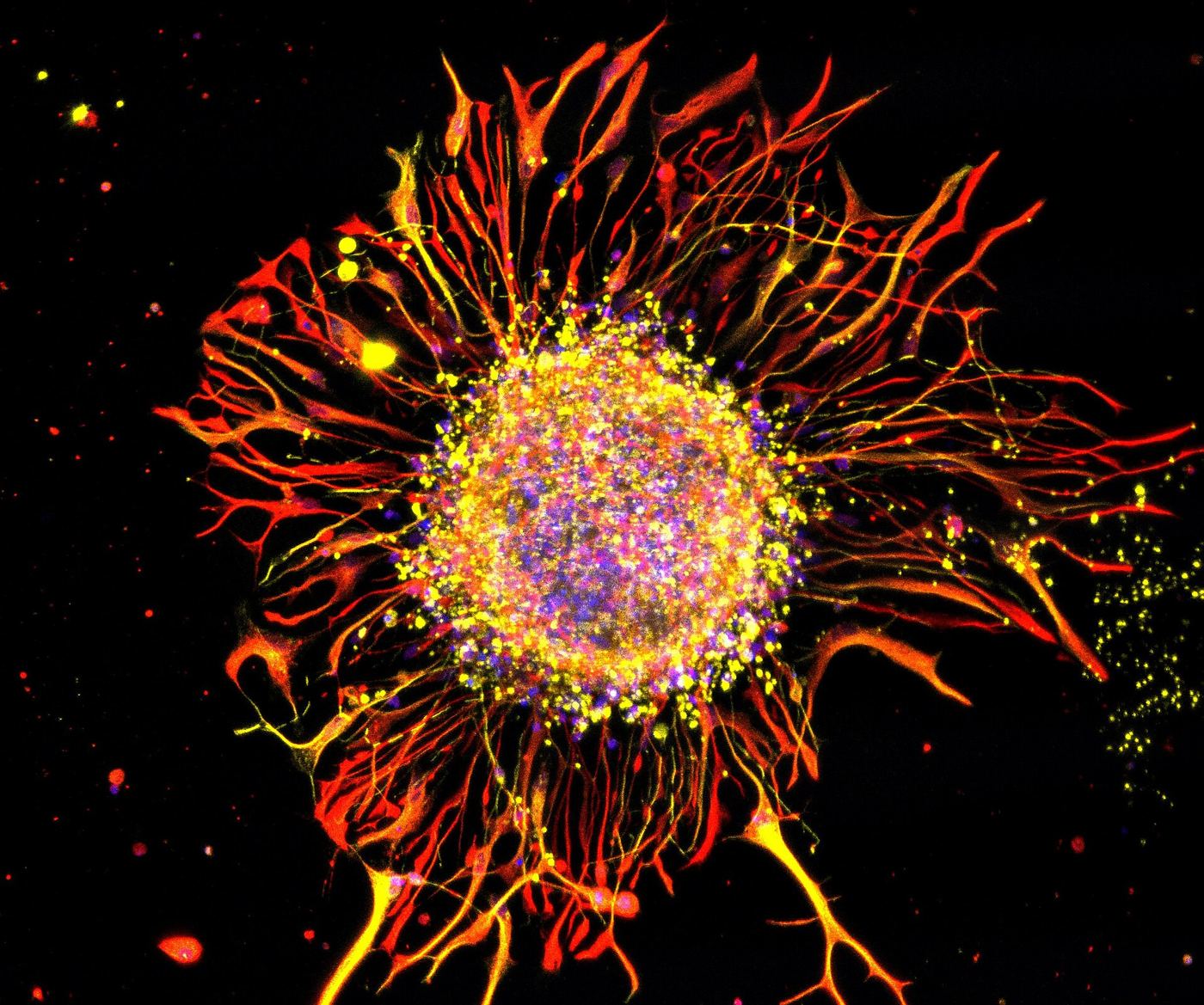
In April 2025, researchers at Kyoto University reported a new kind of treatment for Parkinson’s disease: brain cells grown in a laboratory from the patients’ own skin. Parkinson’s is caused by the death of neurons that produce dopamine, a chemical that controls movement, and patients gradually lose the ability to walk, speak and write. The Kyoto team, led by Jun Takahashi, took skin cells from seven patients, reprogrammed them into induced pluripotent stem cells, and grew them into dopamine-producing neurons. Surgeons then transplanted the cells into the patients’ brains. After two years of follow-up, the study published in Nature reported no serious side effects, the transplanted cells survived and appeared to produce dopamine, and several patients showed modest improvements in movement. It was the first trial of its kind to use a patient’s own reprogrammed cells.
What the Evidence Shows
The result is early and the numbers are small, but the approach solves a problem that has limited stem cell therapy for decades. Earlier trials used cells from donors or foetuses, which the immune system can reject, requiring drugs that suppress immunity. Using a patient’s own cells avoids rejection entirely, though it is slower and more expensive, since every patient needs their own batch of cells grown over months. Other teams are testing donor cells instead, including a trial by BlueRock Therapeutics in the United States, and the two approaches are now in a race. Parkinson’s affects more than 10 million people worldwide and has no cure, so even a treatment that slows the disease would change millions of lives. The Kyoto results suggest that replacing lost brain cells is no longer science fiction. Reporting and analysis from sources such as Nature track the same developments, and specialists following stem cell therapy for Parkinson’s say the direction is now consistent across independent lines of evidence.
The Wider Context
The wider context is a research landscape in which replication and open data now decide reputations. Findings connected to stem cell therapy for Parkinson’s are being checked by independent groups with shared datasets, and the teams involved publish their methods in full so rivals can test every step. That discipline is slower than a headline cycle, but it is why results in this area increasingly survive first contact with scrutiny.
What Happens Next
What happens next in the story of stem cell therapy for Parkinson’s will be decided by follow-up work already under way: larger samples, longer observation and instruments that have not yet come online. The researchers involved are unusually united on one point, that the current results justify the next investment of time and money. Readers will not have to wait long for the first tests of that claim. You can follow related developments in our coverage of science.
None of this will be settled by a single announcement, study or product launch. The pattern to watch is accumulation: independent confirmations, honest reporting of failures and steady improvement in the underlying numbers. Readers who follow those signals, rather than the loudest claim of the week, will understand this subject better than most of the commentary surrounding it suggests is possible.
