

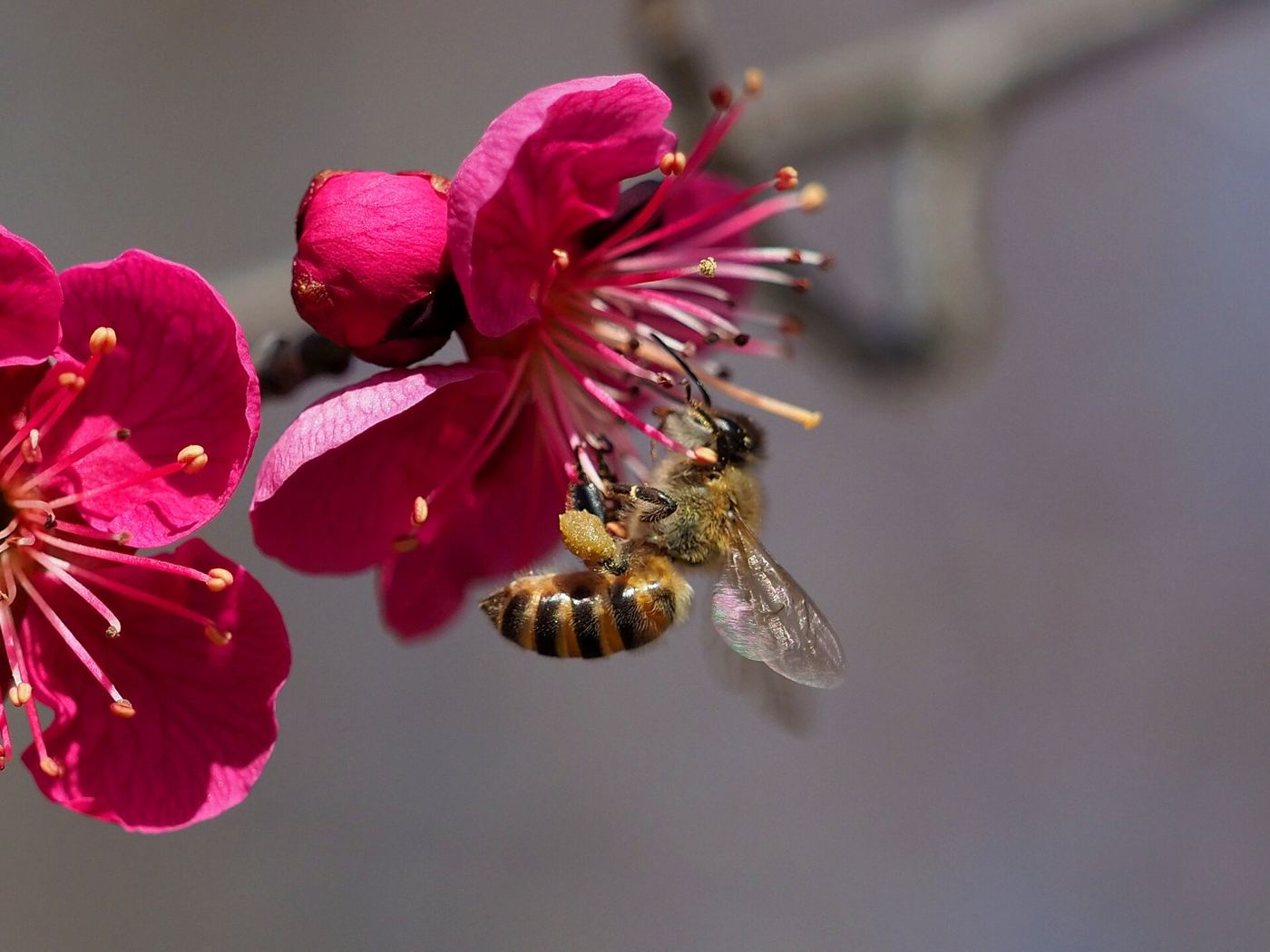
Honeybees navigate miles from their hive and return with remarkable precision by combining the position of the sun, patterns in skylight and memories of landmarks along the route. Experiments using tiny radar tags and displaced feeders show that bees keep track of both direction and distance flown, correcting for wind that pushes them sideways. Even on partly cloudy days, they can read polarised light patterns invisible to human eyes to locate the hidden sun. Back at the hive, successful foragers share what they have learned through the waggle dance, a figure-of-eight movement whose angle and duration encode where food lies. Researchers filming dances with computer vision have decoded thousands of these reports, building maps of where colonies actually forage across a season. The picture is humbling: individual bees hold detailed route memories, revisit profitable flowers at the right time of day and adjust quickly when a food source fails. Understanding this navigation matters beyond curiosity, because bees that cannot find their way home are lost to the colony, and disorientation is one suspected effect of certain pesticides and diseases.
What the Evidence Shows
New work on the honeybee navigation system is revealing how young bees build their maps before they ever forage seriously. Orientation flights, in which beginners hover facing the hive and arc outward in widening loops, appear to stitch together the landmark memories used later in life. Bees raised in featureless landscapes struggle more when displaced, suggesting that varied scenery genuinely supports better navigation. Scientists are also testing how artificial light, shifting flowering times and habitat fragmentation interfere with these finely tuned skills. The findings have practical uses in agriculture, where growers depend on managed and wild bees to pollinate crops worth enormous sums. Placing hives so that bees can use hedgerows and tree lines as guides, and ensuring forage exists throughout the season, both follow directly from navigation research. Miniature tracking technology keeps improving, with tags now light enough to follow individual bees across entire lifetimes. Each tracked journey adds detail to a picture of an insect brain, smaller than a sesame seed, solving problems that still challenge engineered drones. Protecting the landscapes bees navigate by may prove as important as protecting the bees themselves. Reporting and analysis from sources such as Nature track the same developments, and specialists following the honeybee navigation system say the direction is now consistent across independent lines of evidence.
The Wider Context
The wider context is a research landscape in which replication and open data now decide reputations. Findings connected to the honeybee navigation system are being checked by independent groups with shared datasets, and the teams involved publish their methods in full so rivals can test every step. That discipline is slower than a headline cycle, but it is why results in this area increasingly survive first contact with scrutiny.
What Happens Next
What happens next in the story of the honeybee navigation system will be decided by follow-up work already under way: larger samples, longer observation and instruments that have not yet come online. The researchers involved are unusually united on one point, that the current results justify the next investment of time and money. Readers will not have to wait long for the first tests of that claim. You can follow related developments in our coverage of science.
None of this will be settled by a single announcement, study or product launch. The pattern to watch is accumulation: independent confirmations, honest reporting of failures and steady improvement in the underlying numbers. Readers who follow those signals, rather than the loudest claim of the week, will understand this subject better than most of the commentary surrounding it suggests is possible.
